Colin McMaster/Getty Images
FIA explains software glitch behind delayed Bahrain GP in Malaysia start
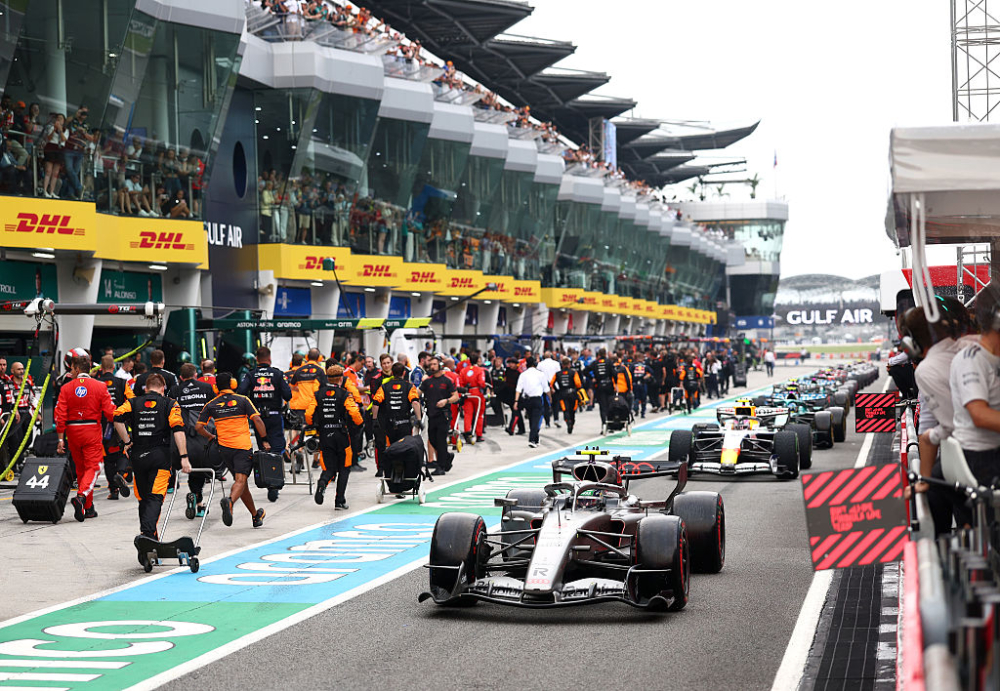
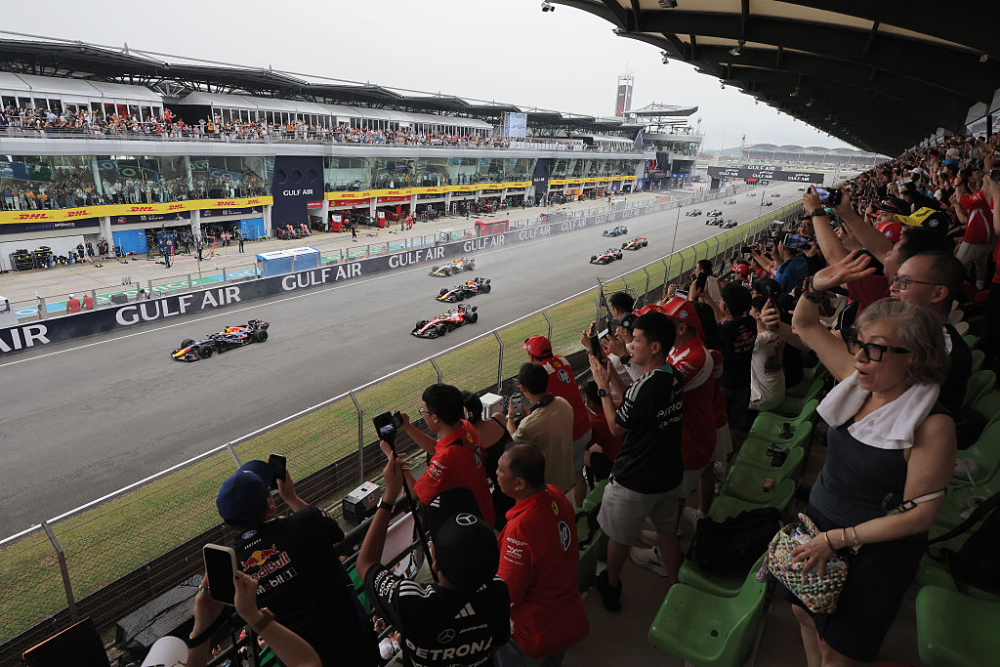
The FIA has explained how a bug in the software for the 2026 power units in wet conditions led to the delay at the start of the Bahrain Grand Prix in Malaysia.
Heavy rain had already delayed the original start for 40 minutes before the field took to the track behind the safety car, with all cars on intermediate tires. Halfway through the opening lap, leader Max Verstappen slowed dramatically, and shortly after he picked up speed again then Lewis Hamilton crawled to an eventual halt before the final corner.
Multiple other cars also slowed or stopped on track, with the FIA issuing a statement post-race explaining the root cause.
“On the formation lap ahead of the Bahrain Grand Prix in Malaysia, an unprecedented combination of low engine speed, low-grip conditions, wet-weather energy management settings and the Sepang circuit’s sector configuration led to an unintended loss of power for a number of cars,” the statement read.
“As a result, the FIA Technical Department removed the energy limit constraint in the affected sectors through an updated software release distributed to all competitors during the race delay caused by heavy rain enabling teams to make the necessary changes to the Power Unit before the start of the race.
"This issue had not been detected by the FIA or the teams during testing or during the laps to the grid. The FIA, together with the teams and Power Unit manufacturers, will undertake a full review of the issue."
The FIA’s single seater director Nikolas Tombazis told SiriusXM that all teams, power unit manufacturers and the official electronic control unit (ECU) provider had all failed to spot such an issue when testing the system, but that its presence across all cars warranted the race suspension.
“When we realized what was happening, and that was clearly not the fault of [the teams’] own, the only option was to red flag and to abandon the start procedure,” Tombazis said. “Fortunately our guys understood the problem very, very quickly, and we had to issue an update of the software within a few minutes of the problem. And we also had to issue some explanations to the teams, the teams asked a few questions and so on.
“It was a rush job, it wasn't the conditions normally people have to work in. So by the time the update was issued, installed by all the teams on their cars, we checked that every car had it, etc, that lost us about 20-25 minutes, which is why there was this delay in that period.”

Chris Medland
While studying Sports Journalism at the University of Central Lancashire, Chris managed to talk his way into working at the British Grand Prix in 2008 and was retained for three years before joining ESPN F1 as Assistant Editor. After three further years at ESPN, a spell as F1 Editor at Crash Media Group was followed by the major task of launching F1i.com’s English-language website and running it as Editor. Present at every race since the start of 2014, he has continued building his freelance portfolio, working with international titles. As well as writing for RACER, his broadcast work includes television appearances on F1 TV and as a presenter and reporter on North America's live radio coverage on SiriusXM.
Read Chris Medland's articles
Latest News


Comments
Comments are disabled until you accept Social Networking Cookies. Update cookie preferences
If the dialog doesn't appear, ad-blockers are often the cause; try disabling yours or see our Social Features Support.